Flax Egg: The Recipe and When It Actually Works (and When It Doesn't)

- Gluten-free
- Nut-free
- Soy-free
- Oil-free
In this guide7
The first time I made a flax egg I expected something to happen. Something dramatic. I mixed the tablespoon of brown powder into the water, set my timer, and watched it like it was going to transform into a yolk.
It didn't. It just got... gloopy. Weirdly gloopy.
Like wet chia pudding had a cousin.
I used it in my banana bread, fully skeptical, and it held together fine. That's the whole story. That's the whole product.
Jump to recipe if you already know what you're doing and just need the ratio.
What a flax egg actually is (and isn't)
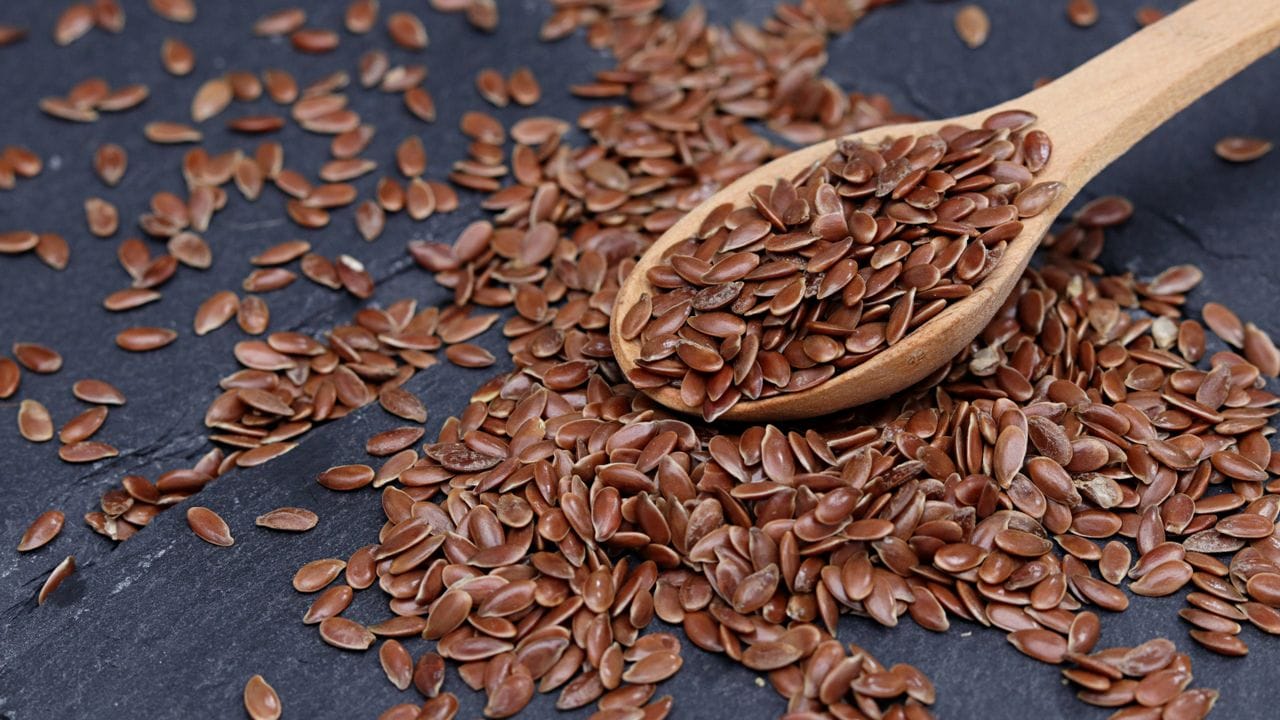
A flax egg is 1 tablespoon of ground flaxseed mixed with 3 tablespoons of water, rested for 5 to 10 minutes until it forms a thick gel. That gel is mucilage, a polysaccharide that sits just inside the outer shell of the flaxseed.
When you grind the seed and add water, the mucilage hydrates and turns viscous. That viscosity is what does the binding work.
Here's my hot take: a flax egg is a binder, not a magic egg replacement. I see a lot of recipes treating it like a universal substitute and it really, truly is not. An egg in baking does several different jobs.
It binds, yes. But it also lifts (via the proteins trapping air when beaten), it sets into a solid (custards, quiche), and it adds fat from the yolk. A flax egg does the binding part.
That's it.
If you walk into a recipe expecting it to do more, you'll be disappointed. If you use it for what it's actually good at, it's genuinely useful.
How to make it (thirty seconds)
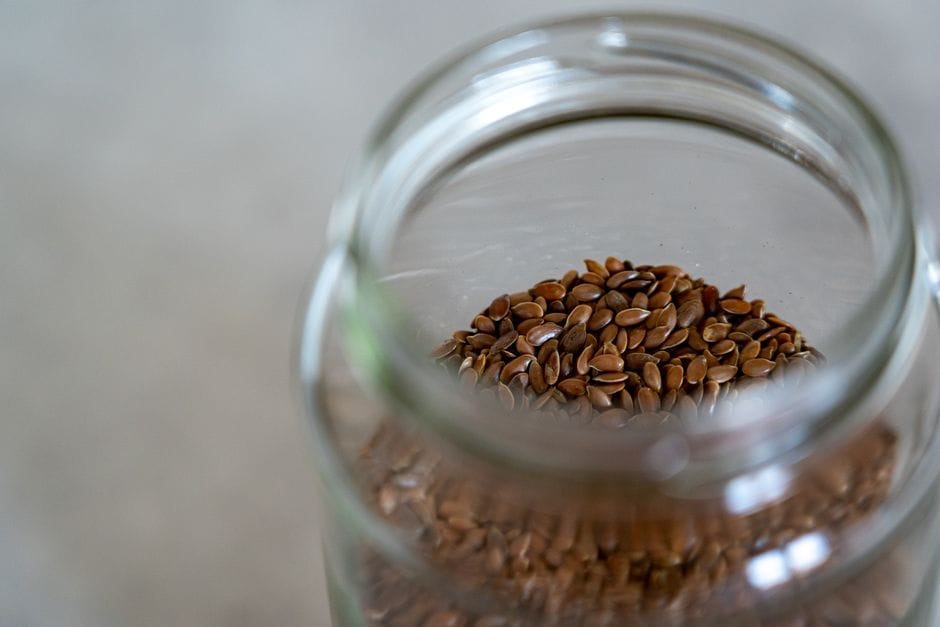 Photo: Castorly Stock / Pexels
Grind your flaxseeds if they're whole, or start with flaxseed meal. One tablespoon of the ground stuff goes into a small bowl. Three tablespoons of water. Stir.
Walk away for five to ten minutes.
When you come back it should look like a loose gel, scoopable but not dry, slightly stringy when you drag a spoon through it. That's what you want. If it's still thin and watery at five minutes, give it another few minutes.
The timing depends a little on how fine your grind is and how warm the water is.
That's your flax egg. Use it immediately in place of one egg.
Where it genuinely shines
Muffins are the ideal home for a flax egg. So are most cookies, pancakes, waffles, and banana bread. Basically: the denser, moister quick-baked things where you need something to hold the batter together and you're not relying on the egg to lift the whole structure.
I've made blueberry muffins with a flax egg fifty times. They come out exactly right. Chocolate chip cookies?
Works perfectly. Oatmeal cookies especially, since the earthier, nuttier flavor of the flax actually fits in. Pancakes come out a tiny bit denser than with a real egg, but in a way I now prefer, actually.
Banana bread is the best use case of all. The banana is doing most of the work already, and you just need a little help binding the whole thing. Flax fits right in and you can't taste it at all.
Where it fails and you should use something else
 Photo: Anna Tarazevich / Pexels
Meringue. Absolutely not. Meringue is whipped egg white and that's a protein network formed through mechanical work.
There is no plant-based equivalent that works the same way. Aquafaba (the liquid from a can of chickpeas) is actually the answer there, not flax.
Custard, quiche, anything that sets into a silky solid slice when baked: flax won't do it. Same with crepes, which need a bit of structure without density. Recipes that call for three or more eggs are a warning sign in general. The more eggs a recipe relies on, the less well any single substitution is going to work.
Angel food cake. Souffle. Anything called "cloud cake."
Stay away.
The chia egg alternative
If you don't have flaxseed, or if you don't love the faint nuttiness that brown flax can add to very delicate batters, chia seeds work on the same principle. One tablespoon of chia seeds (whole is fine here, no grinding needed) plus three tablespoons of water, same rest time. The gel behavior is nearly identical.
The practical difference: chia seeds leave little dark specks in your batter. In a chocolate cookie that doesn't matter at all. In a white or vanilla sponge it looks a bit speckled.
Golden flaxseed meal is my preference for light batters because it blends in visually.
The store-bought "egg" trap
While we're here: a lot of commercial egg replacers marketed at vegans are vegan, but not all of them. Some contain dried egg whites. Some use ingredients that vary by region.
The word "egg" on the front of the package plus a plant-based aesthetic on the branding is not a guarantee.
This fits into a wider pattern with animal-derived ingredients in unexpected places, and if you've started checking labels you already know the feeling. It's the same energy as decoding ingredient lists. Always flip to the back.
The brands that are clearly vegan will say so, usually with a certification mark. If a product calls itself an "egg replacer" and the label isn't clear, a quick search on the brand's site usually settles it in 30 seconds.
One last thing before you go make banana bread
Ground flaxseed goes rancid. If yours smells like old paint or has been sitting in a warm pantry since two winters ago, toss it. Fresh flaxseed meal should smell faintly nutty, almost like a toasted seed.
You can buy it pre-ground or grind your own in a coffee grinder and store in the fridge.
That's all there is to it. One tablespoon, three tablespoons of water, ten minutes of patience. It won't make your soufflé rise.
It'll hold your muffins together.
That's enough.
For more on plant-based ingredient swaps, the guides are organized by what you're replacing, so you can find what you actually need without sorting through fifty variations of aquafaba.
The recipe
Basic Flax Egg
Prep
10 min
Total
10 min
Makes
1 egg replacer
Ingredients
- 1 Tbsp ground flaxseed (flaxseed meal)
- 3 Tbsp water (room temperature or slightly warm)
Instructions
- 1 Combine the ground flaxseed and water in a small bowl.
- 2 Stir briefly, then leave it alone for 5 to 10 minutes until it becomes thick and gloopy, similar to a loose gel.
- 3 Use immediately in place of 1 egg in your recipe.
Notes
- ·Golden flaxseed has a milder flavor than brown flaxseed and is less visible in light-colored batters like vanilla muffins or pancakes.
- ·The ratio is 1 Tbsp flaxseed to 3 Tbsp water per egg. Scale up if your recipe calls for 2 eggs.
- ·Don't rush the rest time. Five minutes gives you a gloopy gel. Two minutes gives you wet flaxseed.
Calories
37
Protein
1.3 g
Fat
2.5 g
Carbs
2 g
Frequently asked questions
Does a flax egg work for all baked goods?+
No. A flax egg binds, it doesn't leaven or add structure the way a whole egg does. It works well in muffins, cookies, pancakes, and quick breads where you need something to hold the batter together. It fails in recipes that need eggs for lift (like cakes that rely on whipped eggs) or for setting into a custard texture.
How long does a flax egg keep?+
Mix it fresh each time. The gel forms within 10 minutes at room temperature and will keep in the fridge for about a day, but it continues to thicken and can get a little funky. Just make it right before you need it.
Can I use whole flaxseeds instead of ground?+
Whole flaxseeds won't form a proper gel. The gel comes from the mucilage in the seed coat, and that only releases when the seed is broken open. Grind them fresh if you can, or buy pre-ground (also sold as flaxseed meal). Store ground flax in the fridge to keep it from going rancid.
Written by
VeganDigest Editorial is the small independent team that researches and fact-checks this site. We are not doctors or dietitians. For every is-it-vegan verdict we read the product's current ingredient list and manufacturer information, and for anything health-related we report guidance from recognized bodies such as the NHS, the Vegan Society, and the Academy of Nutrition and Dietetics rather than offering medical advice. Every page shows the date it was last verified, and our full process is on the How We Verify page.
Comments