How to Cook Tofu So It's Actually Good

 Jump to recipe ↓
 In this guide7
I ate sad, mushy tofu for about three years before I figured out what I was doing wrong. I thought I just didn't like tofu. Turns out, I was treating it like a protein that needed no technique.
Just cube it, throw it in a pan, wonder why it's gray and falling apart. I've since made tofu for people who "hate tofu" and watched them ask for seconds. It's not magic.
It's just method.
First, Let's Talk About Which Tofu You're Actually Buying
Tofu comes in a range of textures: silken, soft, firm, extra-firm, and super-firm. For the techniques in this guide (pan-frying, baking, air-frying) you want firm or extra-firm. Super-firm is great if you find it; it's already quite dry and needs minimal pressing.
Hot take: silken tofu is basically a different food. It's for smoothies, creamy sauces, chocolate mousse. Using it in a stir-fry is like trying to sauté cream cheese.
Not wrong, exactly, but not what anyone meant. Set it aside for another day.
The Press Step You're Probably Skipping
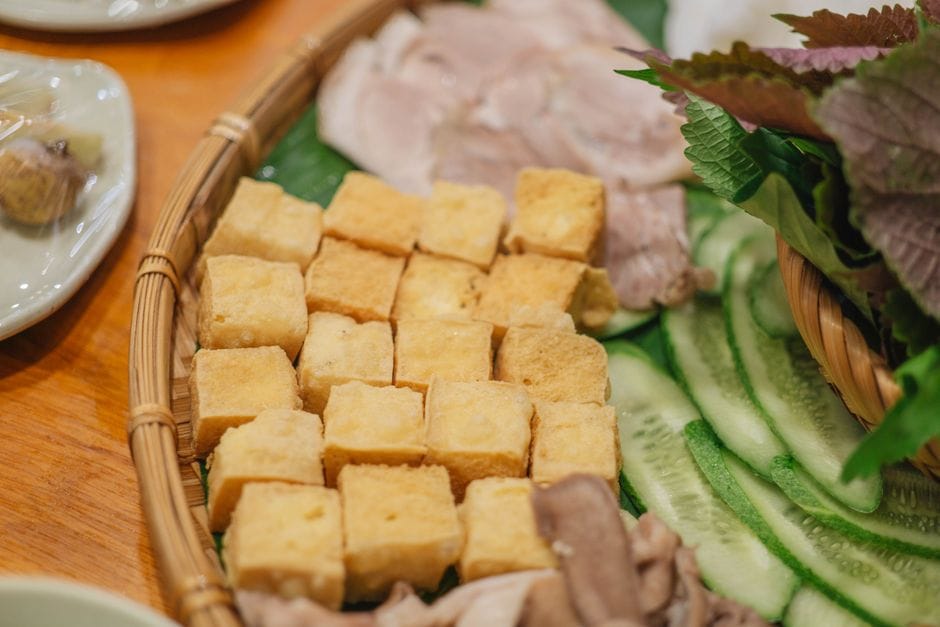 Photo: FOX ^.ᆽ.^= ∫ / Pexels
Tofu is packed in water to keep it fresh. That water is the enemy of crispiness. If you skip pressing, you're not cooking tofu, you're steaming it from the inside out.
You don't need a fancy tofu press. Wrap the block in a clean kitchen towel or paper towels, set it on a plate, put a heavy pan on top (cast iron is great here), and wait at least 20 minutes. Thirty is better.
If you have time, wrap it and refrigerate it overnight, and the texture firms up noticeably.
The Cornstarch Trick (Don't Skip This Either)
After pressing, cut your tofu into whatever shape you want: cubes, slabs, triangles, thin rectangles. Then toss the pieces in a bowl with a tablespoon or two of cornstarch, plus salt and whatever spices you like.
The cornstarch creates a thin, slightly crispy shell. Without it, pan-fried tofu is tender but pale. With it, you get that golden, slightly chewy exterior that makes people go back for more.
Arrowroot powder works too if you're out of cornstarch.
Pan-Fry vs. Bake vs. Air-Fry
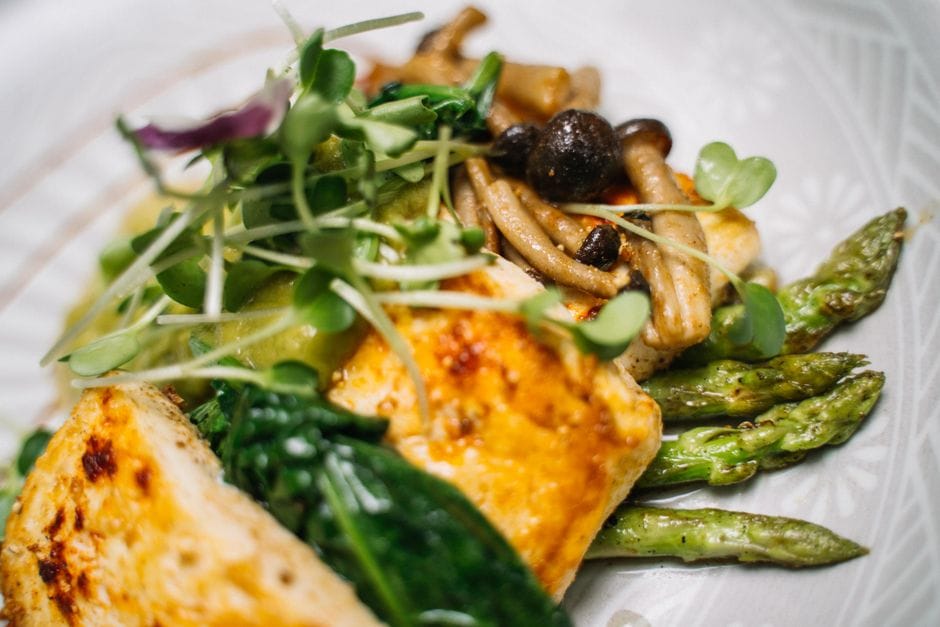 Photo: Anna Tarazevich / Pexels
All three work. Here's the honest breakdown.
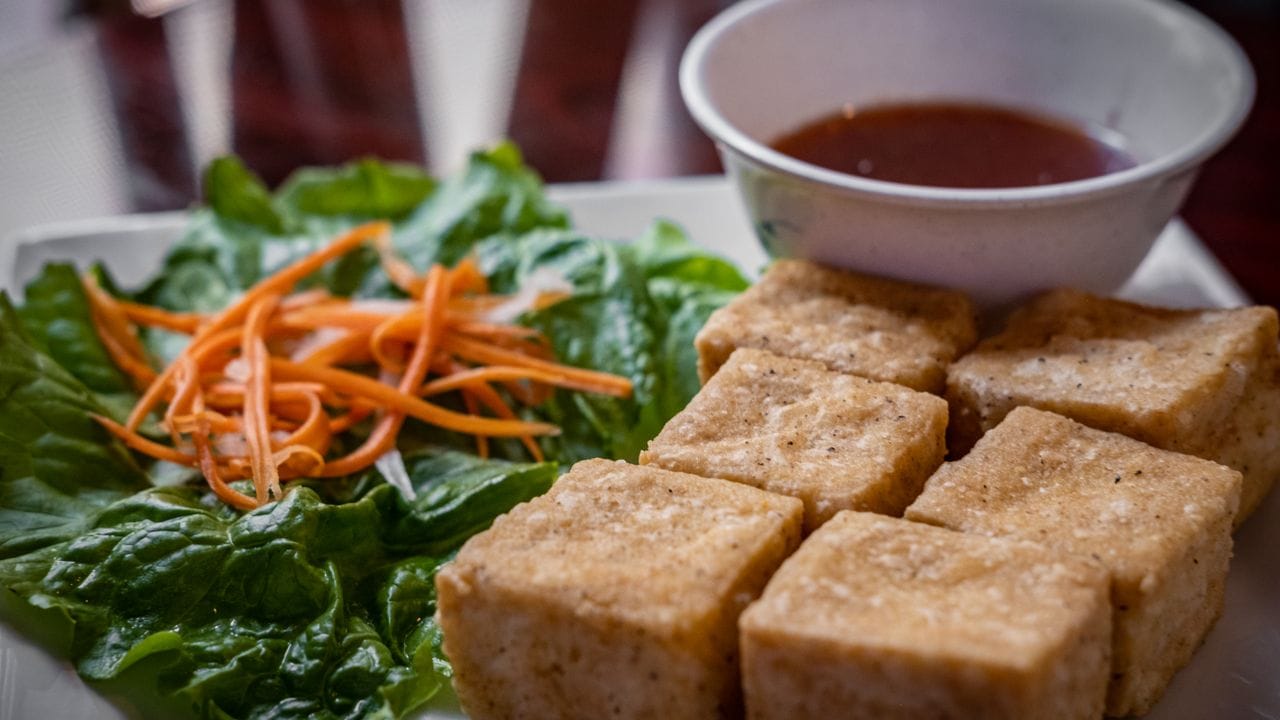
Pan-frying is fastest and gives the best browning. Use a nonstick or well-seasoned cast iron pan, a thin layer of neutral oil (avocado or refined coconut oil are good), and medium-high heat. Add tofu in a single layer and, this is key, don't touch it.
Let it sit for 3-4 minutes until it releases naturally from the pan. Flip once. Done in about 8 minutes total.
Baking is more hands-off. 400F (200C), single layer on a parchment-lined sheet, 25-30 minutes, flipping halfway. Less browning than pan-frying, but good for batch cooking and requires almost no oil.
Air-frying is genuinely excellent for tofu. 380F (193C), 15-18 minutes, shake halfway. The hot circulating air pulls moisture out fast. Probably the crispiest result with the least oil.
Whichever method you choose: don't crowd the pan or tray. Overcrowding traps steam and undoes all your pressing work.
Why You Should Marinate After, Not Before
This is the one that trips people up the most. The instinct is to marinate raw tofu to get the flavor "deep inside." The problem is that waterlogged tofu won't absorb much marinade anyway, and the wet surface prevents browning completely.
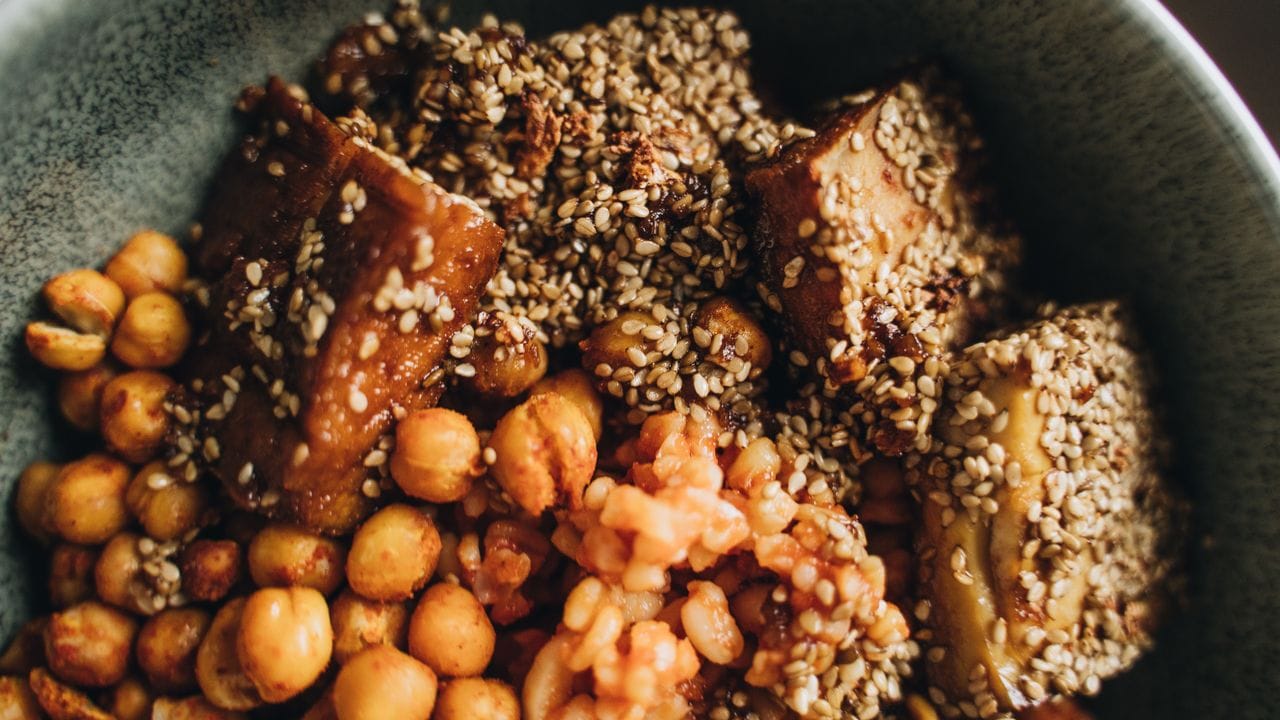
Cook it first. Get it golden and slightly crispy. Then, while it's still hot, toss it in your sauce or marinade.
Hot tofu absorbs flavor fast. You get both texture and taste instead of sacrificing one for the other.
This applies to soy sauce, teriyaki glaze, peanut sauce, whatever you're working with. How to use tofu as a base in plant-based eating is a whole topic on its own, but the after-marinade rule holds across all of them.
The Common Mistakes (I've Made Every Single One)
Using silken or soft tofu for frying: see above. Crowding the pan: steam trap. Not pressing long enough: mushy interior even if the outside browns.
Using too much oil: it fries unevenly. Not letting it sit before flipping: it tears and sticks.
One more: cutting pieces inconsistently. Thin pieces cook faster than thick ones, so if you mix them, some are done while others need more time. Pick a size and be consistent.
A Note on High-Protein Tofu
If you're cooking tofu specifically for the protein (it's a solid source, around 8-10g per 100g for firm varieties), extra-firm and super-firm give you the highest protein-to-water ratio. Worth noting if you're eating plant-based for health reasons; check out our vegan GLP-1 diet guide for more on how tofu fits into a higher-protein vegan approach.
Tofu is not hard. It just needs you to treat it like food with a technique, not a protein that cooks itself. Press it, coat it, give it heat and space, and sauce it at the end.
That's the whole thing.
The recipe
Crispy Pan-Fried Tofu
Prep
30 min
Cook
8 min
Makes
2 to 4 servings
Ingredients
- 1 block (14 to 16 oz) firm or extra-firm tofu
- 1 to 2 tablespoons cornstarch (or arrowroot powder)
- Salt, to taste
- Spices of your choice, to taste
- Neutral oil (avocado or refined coconut oil), enough for a thin layer in the pan
- Sauce or marinade of your choice, for finishing
Instructions
- 1 Wrap the tofu block in a clean kitchen towel or paper towels, set it on a plate, and place a heavy pan on top. Press for at least 20 minutes (30 is better) to remove excess water.
- 2 Cut the pressed tofu into even-sized cubes, slabs, triangles, or rectangles.
- 3 Toss the tofu pieces in a bowl with the cornstarch, salt, and any spices you like until evenly coated.
- 4 Heat a nonstick or well-seasoned cast iron pan over medium-high heat. Add enough neutral oil to coat the pan in a thin layer.
- 5 Add the tofu in a single layer without crowding. Do not touch it for 3 to 4 minutes, letting it release naturally from the pan.
- 6 Flip the tofu once and cook for another 3 to 4 minutes until golden on the other side.
- 7 Remove from heat and immediately toss in your sauce or marinade while the tofu is still hot so it absorbs the flavor quickly.
Notes
- ·For best results, press tofu overnight in the refrigerator for a firmer texture.
- ·Do not crowd the pan or tray as this traps steam and prevents browning.
- ·Cut pieces to a consistent size so they cook evenly.
- ·Marinate after cooking, not before. Hot crispy tofu absorbs sauce fast and retains its texture.
- ·For baking: 400F (200C) for 25 to 30 minutes on a parchment-lined sheet, flipping halfway.
- ·For air-frying: 380F (193C) for 15 to 18 minutes, shaking halfway through.
Calories
Approximately 100 to 120 kcal
Protein
8 to 10 g
Fat
5 to 7 g
Carbs
3 to 5 g
Frequently asked questions
Do you need to press tofu before cooking?+
Yes, almost always, as long as you're pan-frying, baking, or air-frying. Pressing removes excess water so tofu can brown instead of steam. Even 15 minutes makes a real difference.
Should you marinate tofu before or after cooking?+
After, ideally. Raw tofu is full of water, which dilutes the marinade and prevents browning. Cook it first until crispy, then toss in sauce so the flavor actually sticks.
What is the best way to make tofu crispy?+
Press it well, cut it into even pieces, coat lightly in cornstarch, and cook in a hot dry pan or air fryer without crowding. Don't touch it for the first few minutes.
Written by
VeganDigest Editorial is the small independent team that researches and fact-checks this site. We are not doctors or dietitians. For every is-it-vegan verdict we read the product's current ingredient list and manufacturer information, and for anything health-related we report guidance from recognized bodies such as the NHS, the Vegan Society, and the Academy of Nutrition and Dietetics rather than offering medical advice. Every page shows the date it was last verified, and our full process is on the How We Verify page.
Comments