How to Make Cashew Cream (Thick, Thin, and Everything In Between)
- Gluten-free
- Soy-free
- Oil-free
In this guide7
The first time I made cashew cream, I thought I'd done something wrong. I blended it for what felt like forever, poured it over a bowl of roasted sweet potato, and thought: this is it? This is what people are raving about?
Then I tasted it. And I understood immediately.
It's just two ingredients, three if you count salt. But the result is this quietly luxurious cream that coats things, enriches things, and doesn't taste like "oh you couldn't use dairy." It tastes like a thing that was supposed to exist.
I've been making it at least once a week for years. Here's everything I know. Jump to recipe if you're in a hurry, but the ratio section below is worth reading first.
What you're actually doing (and why it works)
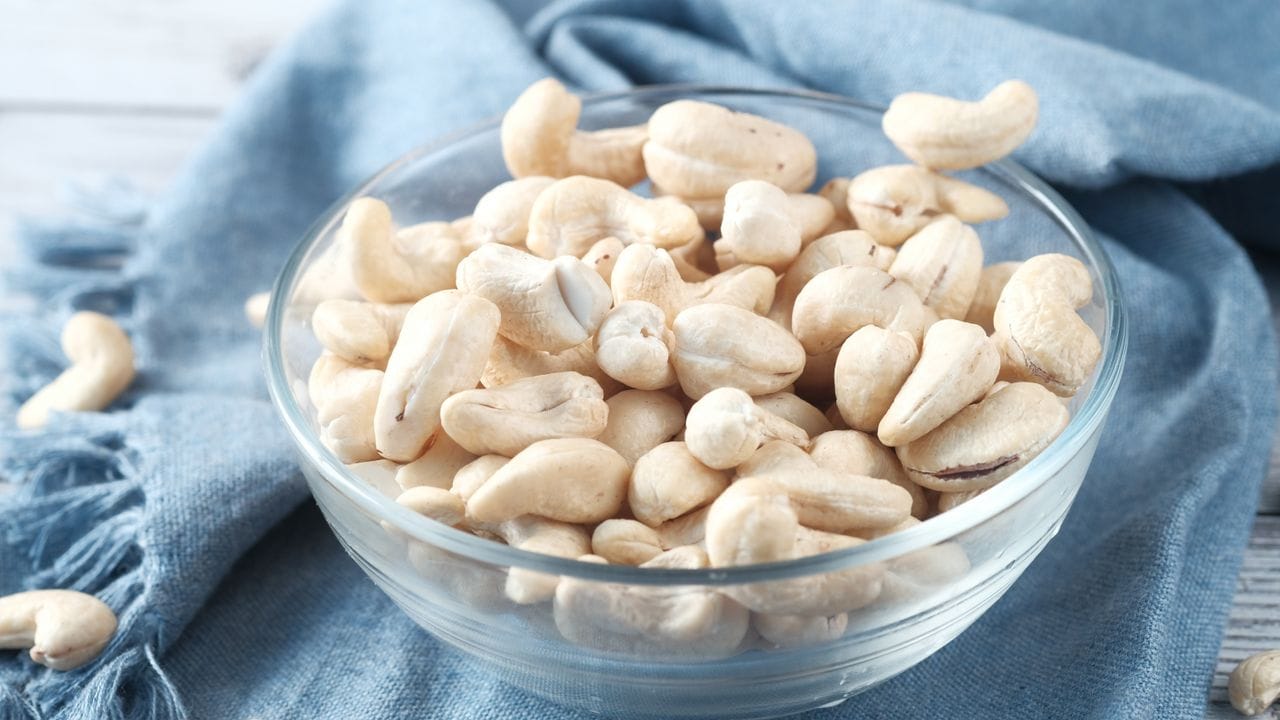
Cashews are lower in fiber than most nuts, which means when you soak and blend them, you get something almost dairy-smooth rather than gritty. The soaking swells the flesh, breaks down enough of the structure that the blender can fully emulsify the fat and water together, and you end up with something that behaves remarkably like cream.
No thickeners. No additives. Just the cashew doing what the cashew was apparently built to do.
The soak: overnight versus the hot shortcut
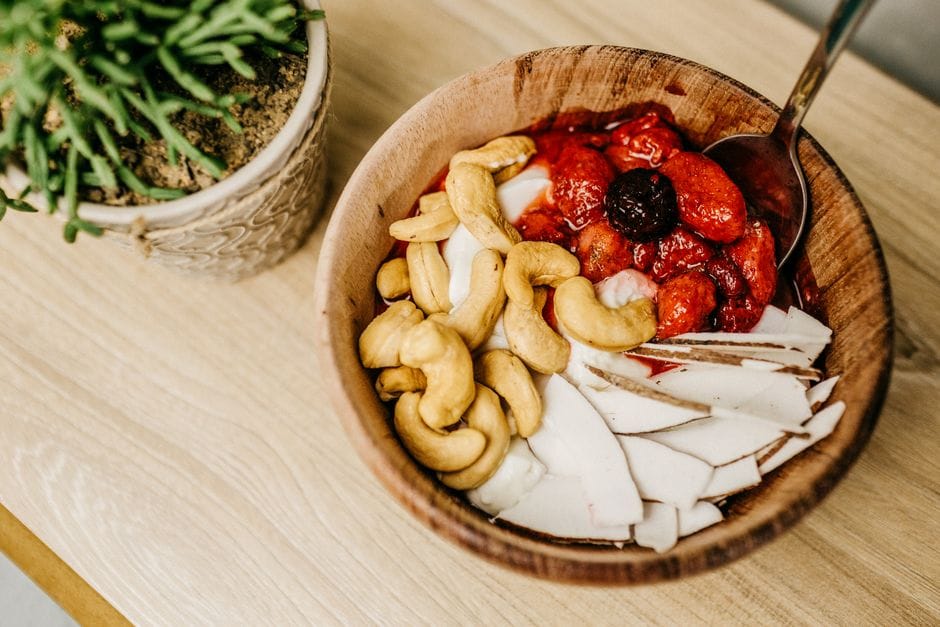 Photo: Jonathan Borba / Pexels
Standard advice is overnight. Cover your cashews with cold water, leave them on the counter for 6 to 8 hours, drain, rinse, blend. It works perfectly and requires zero thinking.
But I'm not always that organized. The hot-soak shortcut is: pour just-boiled water over your cashews, set a timer for 25 minutes, drain, rinse, blend. Honestly?
Nearly identical results. The texture is maybe 5% less silky if I really push for differences, but in a finished dish, nobody notices.
What you want to avoid is blending raw unsoftened cashews and expecting cream. You'll get a thick paste with a slightly grainy mouthfeel. Fine in a pinch.
Not cream.
The ratio is the whole game
This is the thing that took me embarrassingly long to figure out. Cashew cream isn't one thing. It's a sliding scale based on how much water you add per cup of soaked cashews.
Start with 1 cup (140 g) of soaked, drained cashews, and then:
- 1/3 cup water: thick. Spreadable. The consistency of sour cream or cream cheese. Use it dolloped on tacos, swirled into soup, or as a base for vegan cheesecake. This is the version you schmear.
- 1/2 cup water: somewhere in between. Pourable but still rich. Good for pasta sauces where you want it to cling.
- 3/4 cup water: pourable cream. Soups, curries, coffee, anything where you want richness without weight. Drizzles beautifully.
- 1 cup or more: cashew milk territory. Thin, slightly sweet, closer to oat milk in behavior.
Start with less water than you think you need. Blend, then assess. Adding more water is trivial. Diluting an overshopped batch is not fun.
You need a decent blender (honest)
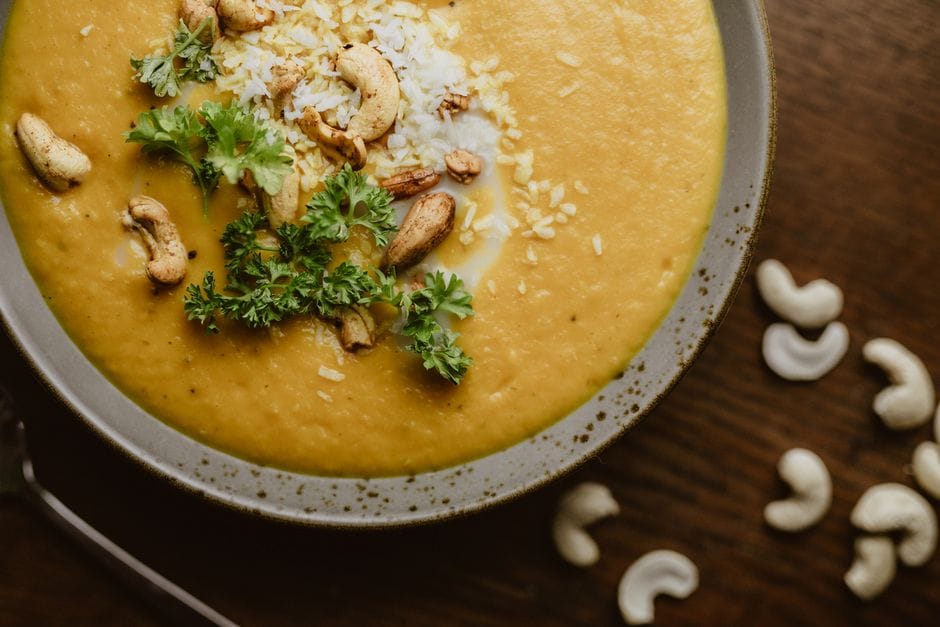 Photo: Sabine Fischer / Pexels
I'm not going to pretend a cheap blender will get this perfectly smooth. It won't. A high-speed blender (Vitamix, Blendtec, even a decent NutriBullet) will give you silky cream in 60 to 90 seconds.
A standard countertop blender will get you most of the way there if your cashews are well-soaked and you blend longer, maybe 2 to 3 minutes with a stop to scrape the sides.
A food processor won't give you cream. It'll give you something closer to a puree. Still useful.
Not the same thing.
This is one of those places where tool quality genuinely matters. Worth knowing going in.
Savory cashew cream
Add lemon juice and a small garlic clove before blending, and you've got something that works in place of sour cream, bechamel, or heavy cream in most savory applications. A pinch of nutritional yeast takes it further toward the cheesy end. Salt aggressively.
I use thick savory cashew cream on loaded baked potatoes, in pasta sauces (add it off the heat so it doesn't split), in gratins instead of cream, and as a base for dressings. It's also what I reach for on tacos instead of the dairy sour cream I grew up with.
It pairs naturally with anything in the how-to category where the original technique relies on cream. Soups especially. Stir it in at the end.
Sweet cashew cream
Same base, different additions. Maple syrup, vanilla extract, maybe a squeeze of lemon for brightness. Blend it thick and you've got a replacement for whipped cream or creme fraiche on fruit, waffles, or crumble.
Blend it thinner and it's a pourable dessert cream.
The sweet version is also the foundation of vegan cheesecake, overnight oat toppings, and mousse. Once you start thinking this way, you'll find uses faster than you can make it.
It's also worth noting that people who don't eat vegan often can't tell what they're eating. That's not a trick. It's just a genuinely good ingredient doing its job.
A note on flavor
Cashews have a mild, slightly sweet flavor that mostly disappears into whatever you're making. That's the point. If you want a more neutral base, use fresh water rather than the soaking liquid.
If you want a nuttier flavor, you can toast the raw cashews lightly before soaking, though this is more of a flavor choice than a technique one.
For anything where you want a very "clean" flavor (desserts especially), rinse the soaked cashews well. For savory applications where you're adding garlic and lemon anyway, rinsing still matters but the stakes are lower.
This is also a useful starting point if you're exploring substitutes for dairy in cooking. Cashew cream is probably the most versatile one.
The recipe
Basic Cashew Cream (Two Ways)
Prep
10 min
Total
10 min
Makes
about 1.5 cups
Ingredients
- 1 cup (140 g) raw cashews, soaked and drained (see notes)
- For thick cream: 1/3 cup (80 ml) fresh water
- For pourable cream: 3/4 cup (180 ml) fresh water
- Pinch of fine sea salt
- Optional for savory: 1 tsp lemon juice, 1 small garlic clove
- Optional for sweet: 1 tsp maple syrup, 1/4 tsp vanilla extract
Instructions
- 1 Drain the soaked cashews and rinse them under cold water.
- 2 Add cashews, your chosen amount of water, and salt to a high-speed blender.
- 3 Blend on high for 60 to 90 seconds, stopping once to scrape down the sides.
- 4 Taste. Add lemon and garlic for savory use, or maple and vanilla for sweet. Blend again for 20 seconds.
- 5 Use immediately or store in a sealed jar in the fridge for up to 5 days.
Notes
- ·Overnight soak: cover cashews with cold water by 5 cm and leave for 6-8 hours.
- ·Hot-soak shortcut: pour just-boiled water over the cashews and soak for 20-30 minutes.
- ·The 1/3 cup ratio gives you a thick, spreadable cream (sour cream territory). The 3/4 cup ratio is pourable and works in soups, pasta sauces, and coffee.
- ·Start with less water. You can always add more. You cannot take it back out.
Calories
95 per 2 Tbsp (thick version)
Protein
3 g
Fat
7 g
Carbs
5 g
Frequently asked questions
Do you have to soak cashews for cashew cream?+
Technically no, but practically yes unless you have a very powerful blender. Soaking softens the cell walls so your blender doesn't have to work as hard. Skip the soak and you'll get a slightly grainy texture that doesn't fully smooth out, even in a Vitamix. The hot-water shortcut (20-30 minutes in just-boiled water) works well if you're short on time.
How long does cashew cream keep in the fridge?+
About 5 days in a sealed jar. It thickens a bit as it sits, which you can fix by stirring in a splash of water. For longer storage, freeze it in ice cube trays, then transfer to a bag. Thaw overnight in the fridge and give it a good stir.
Can I make cashew cream without a high-speed blender?+
Yes, but you need to soak the cashews for the full 8 hours (or overnight) and be patient. A regular blender will get there if you run it long enough, stopping to scrape the sides. A food processor won't get it fully smooth, it'll be more of a cashew paste. The hot-soak shortcut also helps a lot here.
Written by
VeganDigest Editorial is the small independent team that researches and fact-checks this site. We are not doctors or dietitians. For every is-it-vegan verdict we read the product's current ingredient list and manufacturer information, and for anything health-related we report guidance from recognized bodies such as the NHS, the Vegan Society, and the Academy of Nutrition and Dietetics rather than offering medical advice. Every page shows the date it was last verified, and our full process is on the How We Verify page.
Comments